
Brisbane exteriors get a special kind of messy. Heat, humidity, sudden downpours, and those long shady stretches on the southern side of the house… that’s basically an algae and mildew incubator. If you wash smart, your home looks sharper and your paint lasts longer. If you wash hard, you can force water behind cladding, scar timber, and turn a small job into a repair bill.
One line you should remember:
Clean is good. Stripped, etched, and waterlogged is not.
DIY or hire a pro? Here’s the thing…
DIY exterior washing can be totally fine in Brisbane—if you’re only tackling some basic exterior house washing in Brisbane on a straightforward rinse-and-treat job, single storey, easy access, no weird angles. But once you add height, fragile finishes, or a roof edge that’s basically a skate ramp, the maths changes.
DIY makes sense when:
– You’re dealing with light mildew/algae and general grime
– It’s a single-level home (or you’re staying off ladders)
– You’re comfortable mixing and applying detergents correctly (most people aren’t, at first)
– You can work slowly, in the right weather window
A pro earns their money when:
High gutters, steep blocks, chalky paint, oxidised surfaces, flaking render, or anything you’d hate to damage. Also: time. A good operator can do in two hours what takes a homeowner a full weekend of start-stop troubleshooting.
Now, this won’t apply to everyone, but if you’re prepping for repainting? Pros often spot the early warning signs, loose substrate, hairline cracking, failing caulk, before you lock moisture in or blast paint off.
Hot take: most “pressure washing” is overkill for Brisbane homes.
You don’t need a cannon. You need the right chemistry, dwell time, and rinse technique.
Pressure is a tool, not a strategy.
Different methods suit different surfaces, and Brisbane homes are usually a mixed bag: painted timber, render, brick, Colorbond fences, concrete paths, sometimes a tiled roof. Treat them the same and something will lose.
Soft wash (low pressure + detergent)
This is the go-to for anything you care about: painted surfaces, render, eaves, soffits, weatherboards. You’re letting detergent do the work, not brute force. In shaded, humid spots where growth is organic, soft washing is often the most effective option.
Pressure wash (higher force)
Concrete, some bricks, and certain hardscapes, yes. Painted timber, aged mortar, older render, careful. Too much pressure can “fuzz” timber grain, drive water into tiny cracks, and carve lines into softer masonry.
Gentle wash (middle ground)
Good for textured brick, some tile roofs (with serious caution), and areas where you need a bit more agitation but don’t want the surface trauma of full pressure.
If you’re unsure, test a small patch somewhere invisible. Always.
Before you touch a hose: a quick readiness check
Walk the perimeter slowly. Pretend you’re inspecting a rental exit condition report.
Look for:
– Cracked mortar, loose pointing, failing render
– Flaking paint or chalky oxidation (that powdery residue that comes off on your fingers)
– Gaps around windows, doors, vents
– Sagging gutters, rust spots, loose downpipes
– Power lines, outdoor outlets, exposed cables
If water can get behind it, it will.
(And if the exterior is already failing, washing can make it fail faster. That’s not you “doing it wrong”, it’s physics.)
Detergents: go eco-friendly, but don’t go naive
Biodegradable, plant-safe detergents are a great choice in Brisbane because runoff is real. Stormwater drains don’t go to a treatment plant. They go straight to waterways.
A practical yardstick: if the label is vague or marketing-heavy, skip it. You want clear dilution ratios and a defined dwell time.
Also, don’t play backyard chemist:
– Don’t mix cleaners with bleach or ammonia
– Don’t “double-dose” to save time
– Don’t leave detergent drying on the wall because you got distracted
If you want one evidence-backed reason to care about runoff: Australia’s stormwater pollution is widely recognised as a major contributor to urban waterway contamination; the Queensland Government notes that stormwater carries pollutants directly into waterways via drains (Queensland Government, DES: information on stormwater and waterway health).
Source: Queensland Government (Department of Environment, Science and Innovation), stormwater/waterway pollution guidance.
Brisbane timing: when to wash so it actually stays clean
Rain is the obvious enemy, but harsh sun is sneaky. Detergent drying too fast leaves residue and streaking, and it can mark porous surfaces.
Aim for:
– No rain forecast for 24 hours after washing
– Low wind (overspray and uneven dwell time are a pain)
– Early morning or late afternoon work blocks
Brisbane summer afternoons can cook product onto the wall. I’ve seen people “clean” their render and end up with tiger-striping that only disappears after another rinse… or a repaint.
Plants, pets, and the stuff you’ll regret killing
Look, overspray happens. So plan as if it’s guaranteed.
A simple approach that works:
- Pre-wet plants and garden beds with clean water (dilutes any accidental detergent contact)
- Cover sensitive plants if you’re applying any stronger mix
- Keep pets indoors until everything is rinsed and runoff is done
- Rinse again at the end, especially around edible gardens and herbs
If you’re on a slope and runoff runs toward a drain, be extra conservative with detergents. Use the minimum effective concentration and keep the rinse controlled.
Gear and setup (a little technical, because it matters)
You don’t need a trailer full of gear, but you do need the basics that stop accidents and stop damage.
Safety gear
Gloves. Eye protection. Non-slip shoes. If you’re using anything that mists (even “eco” detergent), wear a mask/respirator suitable for aerosols. Ladder work? I’m biased against it for washing jobs. Wet rungs and hoses are a nasty combo.
Equipment that actually helps
– Pump sprayer for detergent application (more control than blasting from the washer)
– A low-pressure washer or adjustable nozzle setup
– Extension pole/soft brush for spot agitation
– Drop sheets or plastic to protect delicate beds/outlets
– Spare o-rings and a nozzle cleaning pin (tiny things, huge time-savers)
One-line reality check:
If your hose connections leak, you’ll waste half your time troubleshooting.
The step-by-step wash (steady, not heroic)
There are a dozen ways to do this, but this workflow keeps you out of trouble.
1) Clear and seal
Move pot plants, outdoor furniture, doormats. Close windows. Cover outdoor power points. Block obvious gaps if wind-driven spray could get in.
2) Dry brush loose debris (optional, but smart)
Cobwebs, caked mud, loose dust under eaves, knock it off first. Washing it just turns it into brown streaks.
3) Apply detergent from bottom to top
Yeah, bottom to top. It reduces streaking because detergent isn’t running down over dry, dirty wall and “drawing” lines as it goes.
Let it dwell. Not forever. Just long enough to work.
4) Rinse from top to bottom
Controlled passes. No “writing your name” with the wand. Keep distance consistent. If you’re getting clean stripes, you’re too close or too aggressive.
If pressure drops, stop and check:
– kinked hose
– clogged nozzle
– dirty filter
– air leak in fittings
5) Final check + spot treatment
Shaded sides often need a second light hit, not a harder hit. Big difference.
6) Pack down properly
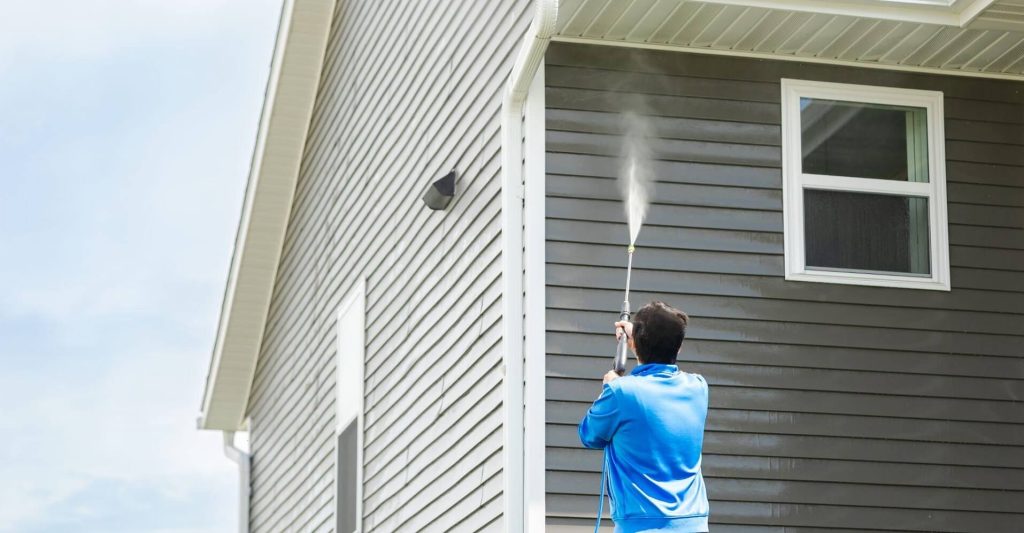
Rinse your sprayer, flush hoses, empty leftover mix, store chemicals out of heat. Brisbane garages get hot enough to degrade some products faster than you’d think.
Aftercare: the unsexy part that keeps it clean
Mould and algae don’t “come back” out of spite. They come back because the conditions are still perfect.
Things that make a real difference:
– Keep gutters clear so water isn’t constantly splashing the same wall sections
– Trim vegetation off the house line (airflow matters more than people admit)
– Light rinse after long wet spells, especially on the shaded side
– Treat early spots immediately rather than waiting for a full-house wash
In my experience, the best maintenance schedule is boring: small, regular touch-ups beat one aggressive annual blast every time.
Cost, time, quality: a blunt comparison
DIY is cheaper upfront, almost always. Then you add: detergents, sprayers, replacement fittings, maybe a surface repair if something goes sideways. Pros look expensive until you realise you’re paying for speed, height safety, and technique consistency.
Quality-wise? A careful DIYer can get excellent results on normal surfaces. Where pros pull ahead is uniformity (no streaks), risk control, and knowing when not to wash something until it’s repaired.
If you’re standing there debating whether a surface can handle pressure, that’s usually your answer.